Icelandic Botanicals
Discover the remarkable plants and lichens that have been part of Icelandic traditions for over a thousand years, now featured in our premium CBD formulations.
Iceland's Botanical Landscape
Iceland is a land of extremes—volcanic fire beneath glacial ice, endless summer days followed by winter darkness, wind-scoured highlands meeting sheltered coastal valleys. In this demanding environment, only the most resilient plants survive.
The botanicals that thrive here have evolved remarkable adaptations. They concentrate protective compounds—antioxidants, essential oils, and unique phytochemicals—to survive the harsh conditions. These same compounds have made Icelandic plants valued in traditional botanical practices for over a millennium.
At Icelandic Elements, we honour this heritage by thoughtfully combining traditional Nordic botanicals with modern CBD science. The result is a distinctive product range that bridges ancient wisdom and contemporary research.
Our Botanical Heritage
Each botanical brings centuries of traditional use combined with modern scientific understanding.
Angelica
Angelica archangelica
Known as hvönn in Icelandic, Angelica archangelica has been a cornerstone of Nordic botanical tradition for over a thousand years. This majestic plant thrives in Iceland's harsh climate, growing up to two metres tall in sheltered valleys and coastal areas.
Traditional Use
Viking settlers considered Angelica so valuable that laws protected wild-growing plants. It was used in Nordic culinary tradition and as an aromatic botanical preparation during Iceland's long, dark winters. The roots, stems, and seeds all played roles in traditional preparations.
Modern Science
Modern research has identified over 60 compounds in Angelica, including coumarins, essential oils, and flavonoids. The plant's complex phytochemical composition continues to be studied in botanical research.
Featured In:
Icelandic Moss
Cetraria islandica
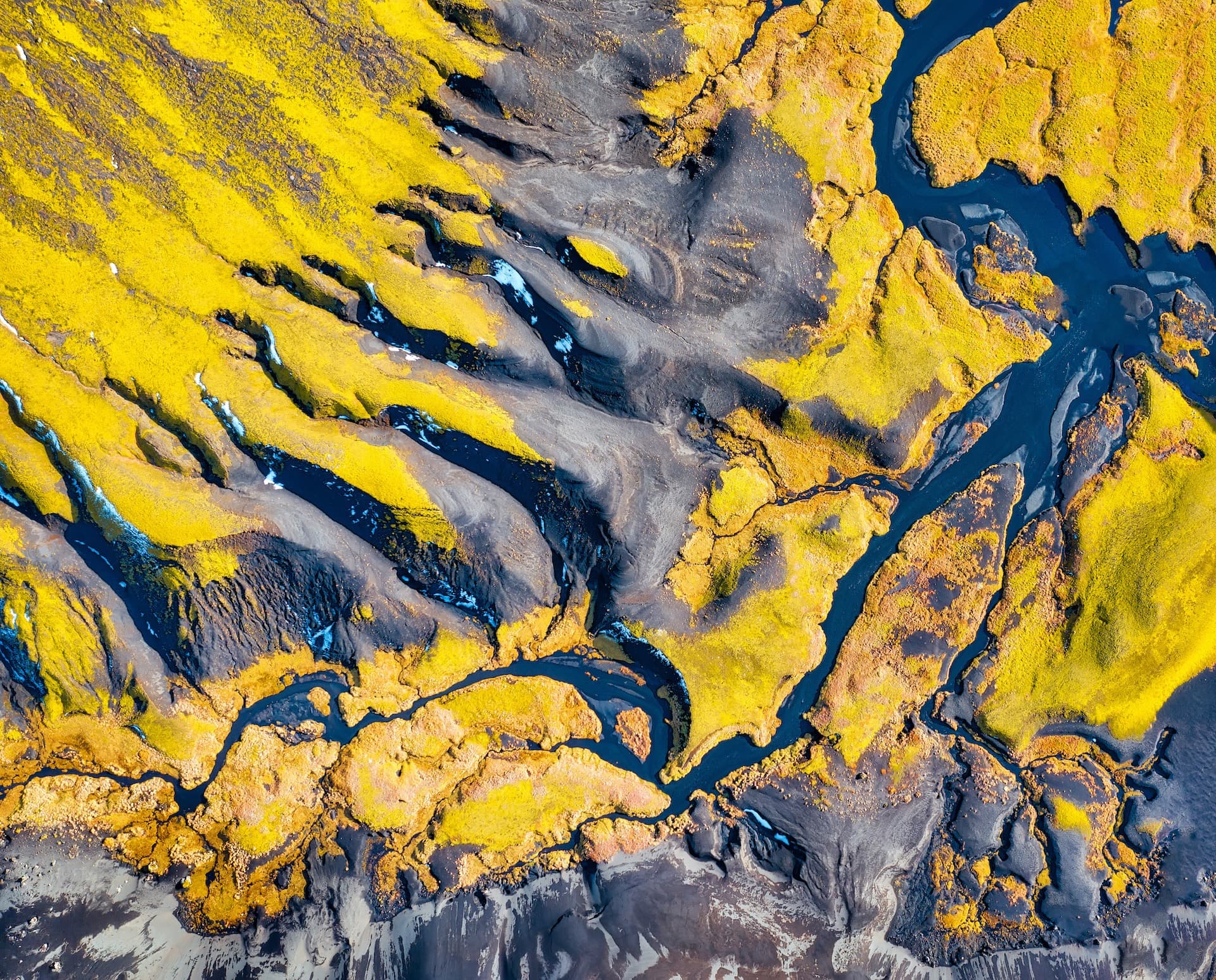
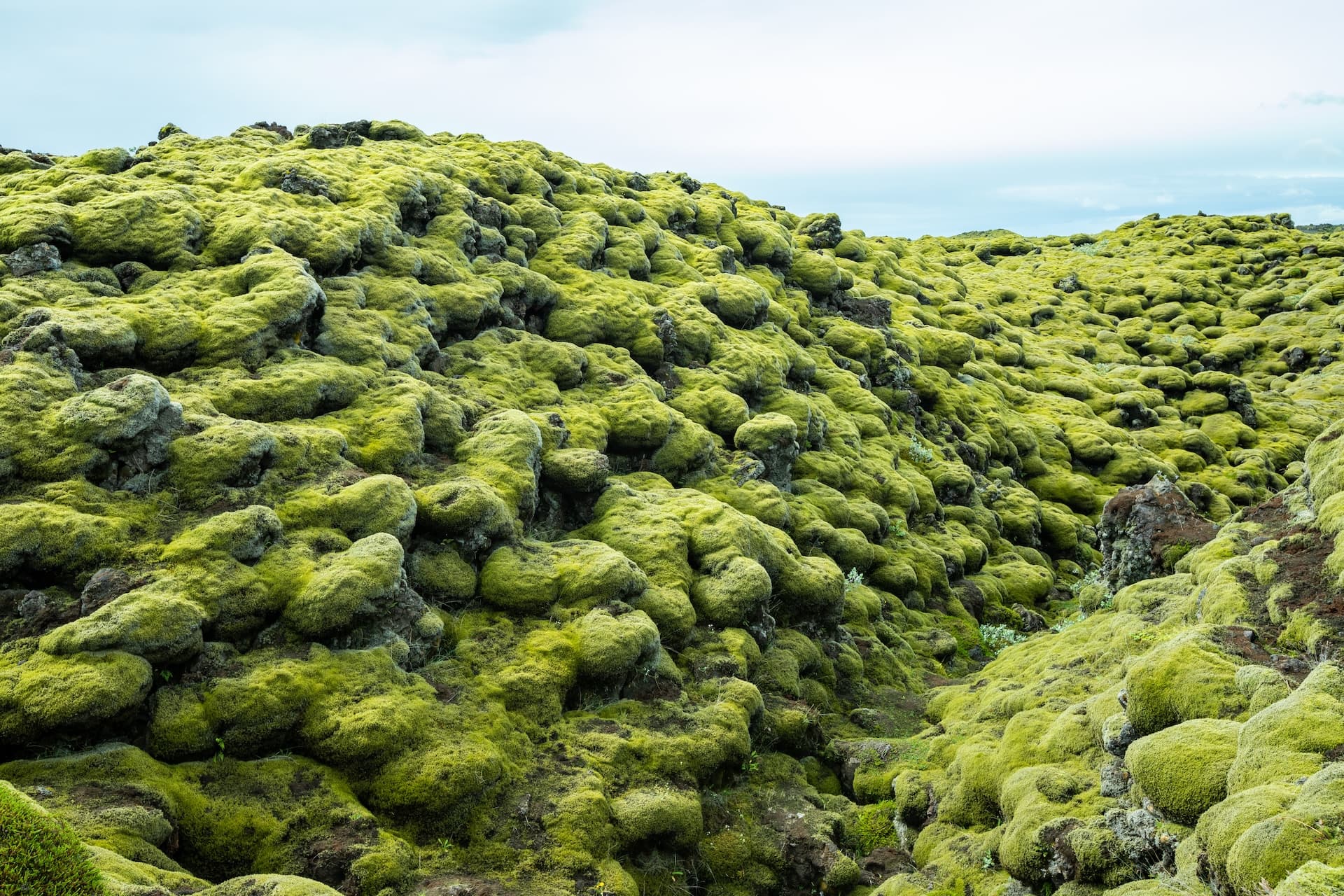
Despite its name, Icelandic Moss is actually a lichen — a symbiotic organism combining fungi and algae. This remarkable life form covers vast stretches of Iceland's lava fields, slowly transforming volcanic rock into fertile soil over centuries.
Traditional Use
Icelanders have used fjallagrös (mountain grass) for centuries as both food and in traditional preparations. It was traditionally prepared as a porridge or tea during cold weather. Sailors carried it on long voyages for its nutrient density.
Modern Science
Research has confirmed Icelandic Moss contains unique polysaccharides, including lichenin and isolichenin, along with lichen acids. Its complex biochemical composition continues to be studied by researchers.
Birch
Betula pubescens
Iceland's native birch (björk) once covered much of the island before Viking settlement. Today, conservation efforts are restoring birch woodlands. The tree is valued for its bark, leaves, and sap, each with unique characteristics.
Traditional Use
Birch has deep roots in Nordic botanical traditions. The bark was used in traditional preparations, while birch leaf tea was valued as a seasonal botanical. Birch sap was collected in spring as a traditional seasonal drink.
Modern Science
Birch bark contains betulin and betulinic acid, compounds studied in botanical research. Birch leaf extracts are rich in flavonoids and their phytochemical composition continues to be investigated by researchers.
Crowberry
Empetrum nigrum
Krækiber, or crowberry, blankets Iceland's heathlands with its low-growing evergreen shrubs. In late summer, these plants produce small black berries that have sustained both wildlife and humans in the Arctic for millennia.
Traditional Use
Crowberries were traditionally gathered for winter storage, eaten fresh, or made into juice. Beyond nutrition, they were used to create natural dyes and in culinary and folk tradition use. The berries' long shelf life made them invaluable for survival in Iceland's challenging climate.
Modern Science
Crowberries rank among the highest berries for anthocyanin content — the compounds that give them their deep purple-black colour. These polyphenols are studied for their phytochemical composition and antioxidant properties in laboratory settings.
Reindeer Moss
Cladonia rangiferina
Another remarkable lichen rather than a true moss, Reindeer Moss (hreindýramosi) forms soft, branching cushions across Iceland's highlands. It grows incredibly slowly — just a few millimetres per year — making each colony potentially centuries old.
Traditional Use
Named for its importance as winter forage for reindeer, this lichen was also used by Arctic peoples in traditional preparations. In Icelandic folk traditions, it was applied externally and valued as a seasonal botanical.
Modern Science
Reindeer Moss contains usnic acid and other lichen-specific compounds. Its polysaccharides have been studied for their biochemical properties in laboratory research.
Arctic Bilberry
Vaccinium myrtillus
Arctic bilberries (aðalbláber) grow wild across Iceland's heathlands, producing intensely flavoured berries with a rich phytochemical profile compared to their lowland relatives. The extended summer daylight and harsh growing conditions concentrate their remarkable composition.
Traditional Use
Bilberries have been gathered for food across Northern Europe for centuries. British RAF pilots reportedly ate bilberry jam during WWII, and the berries have long been valued in folk traditions across Scandinavia and Iceland.
Modern Science
Bilberries are exceptionally rich in anthocyanins, particularly delphinidin and cyanidin glycosides. Research has explored their distinctive anthocyanin composition and phytochemical profile. Arctic varieties show even higher concentrations of these compounds.
Featured In:
Botanicals Meet CBD
When traditional Icelandic botanicals are combined with modern CBD formulations, the result is a distinctive product range that draws on Nordic heritage. Angelica's aromatic qualities complement CBD extracts, while Bilberry's rich anthocyanin profile features in our renewal-focused skincare formulations.
This isn't just ingredient stacking. It's thoughtful formulation that respects both centuries of Nordic botanical tradition and modern cosmetic science.
Traditional Botanicals
Centuries of Icelandic botanical heritage
Modern CBD
Premium hemp-derived cosmetic ingredients
Premium Skincare
Distinctive formulations inspired by Nordic nature
Botanical FAQs
1Are these botanicals wild-harvested or cultivated?
Our approach depends on the botanical. Some, like Angelica, can be sustainably cultivated, ensuring consistent quality and protecting wild populations. Lichens like Icelandic Moss grow extremely slowly and are carefully sourced with sustainability in mind. We prioritise ethical sourcing practices that respect Iceland's delicate ecosystems.
2Why are Icelandic botanicals notable?
Iceland's unique environment — volcanic soil, pristine air and water, extreme seasonal light variations, and harsh growing conditions — creates plants with distinctive phytochemical profiles. Plants develop higher concentrations of protective compounds to survive in these challenging conditions.
3How do you incorporate botanicals into your CBD products?
We carefully select botanicals that complement CBD in our cosmetic formulations. For example, Angelica's aromatic properties pair naturally with our CBD oils, while Bilberry's rich anthocyanin profile features in our renewal-focused skincare formulations. Each pairing is intentional and rooted in Nordic botanical tradition.
4What is the role of botanicals in your products?
Icelandic botanicals contribute their unique natural properties and aromatic qualities to our cosmetic formulations. Combined with CBD, they form part of our distinctive product range inspired by Nordic traditions.
Discover Botanical CBD Skincare
Experience the unique synergy of Icelandic botanicals and premium CBD in our carefully crafted products.